
The Invention of Privacy
Privacy developed through arguments about property, personality and publicity; its value reaches beyond having something to hide.
Imagine drawing the curtains at the end of an ordinary day. The gesture need not conceal anything scandalous. A person may simply wish to stop being available to observation. The room remains connected to the world, but its occupant chooses a temporary boundary. Privacy begins to look different when we consider that modest wish before asking what wrongdoing might take place behind the fabric.
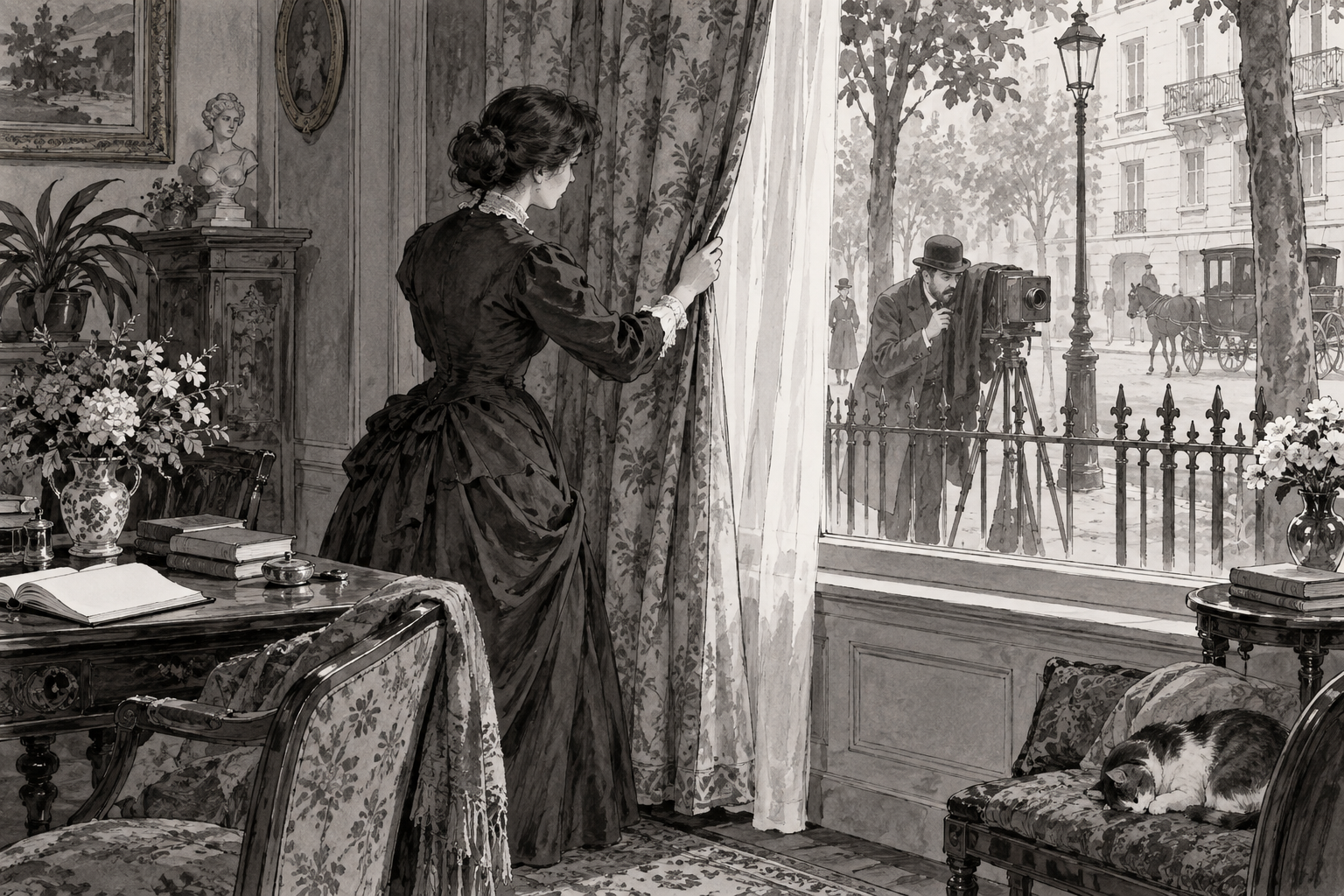
The title of this essay cannot mean that one society invented the desire for seclusion. It refers to the development of particular arguments for protecting private life. In their 1890 Harvard Law Review article, Samuel Warren and Louis Brandeis considered how law might respond to intrusive publicity. Photography and newspaper enterprise, they argued, exposed intimate life in ways that existing legal categories needed to address. Their account moved beyond treating the problem simply as interference with property. [1]
They sought protection for personality and the private sphere, while recognising qualifications concerning matters of public interest. This was a legal proposal in a particular American setting, not the birth certificate of a universal feeling. Its importance lies partly in how it framed the injury: something could be wrong with unwanted publication even when the information was true and no physical object had been stolen. [1]
That distinction remains illuminating. Suppose a neighbour repeats an accurate account of someone's grief to an audience of strangers. Accuracy answers one question, but leaves others untouched. Why was the information shared? Who needed it? Did the person whose life supplied the story have any meaningful choice? A fact does not lose its human consequences merely because it can survive verification.
Privacy also has an awkward relationship with resources. A room of one's own, a door that closes and the ability to refuse questions are easier to obtain when one's circumstances allow them. To describe privacy only as an individual preference risks overlooking the arrangements that make it possible. A person required to explain every difficulty to obtain assistance may experience exposure as a condition of getting through the week.
At the same time, private life should not become a shelter for abuse. A demand that outsiders mind their own business can protect a vulnerable person, or protect someone exercising power over them. The difficulty cannot be resolved by declaring either privacy or transparency an absolute good. We need to ask whose interests a boundary serves, who controls it and whether those inside it can seek help.
There is another distinction worth preserving: voluntary disclosure is not an agreement to unlimited circulation. A person may speak candidly to a friend because of the relationship in which the words are received. Moving those words into a different setting changes the act. The content stays identical while the audience, purpose and consequences shift. Respect for privacy requires attention to those relationships, not simply possession of information.
What draws me to this history is the idea that a human being needs some freedom from an audience. We think incompletely, revise ourselves and behave differently among people we trust. Constant exposure can encourage the appearance of consistency at the expense of honest development. An unfinished thought deserves somewhere to exist before it is made to represent its thinker permanently.
I would therefore defend privacy without making secrecy its principal virtue. Its deeper contribution is room: room to recover, experiment, grieve and change without immediately becoming material for someone else's judgement. Drawing the curtains does not amount to leaving society. Sometimes it is how we gather enough of ourselves to return to it.