Before Everything Had a Price
Gifts, obligations and markets have long overlapped. Their history challenges the assumption that a price tells us everything about value.
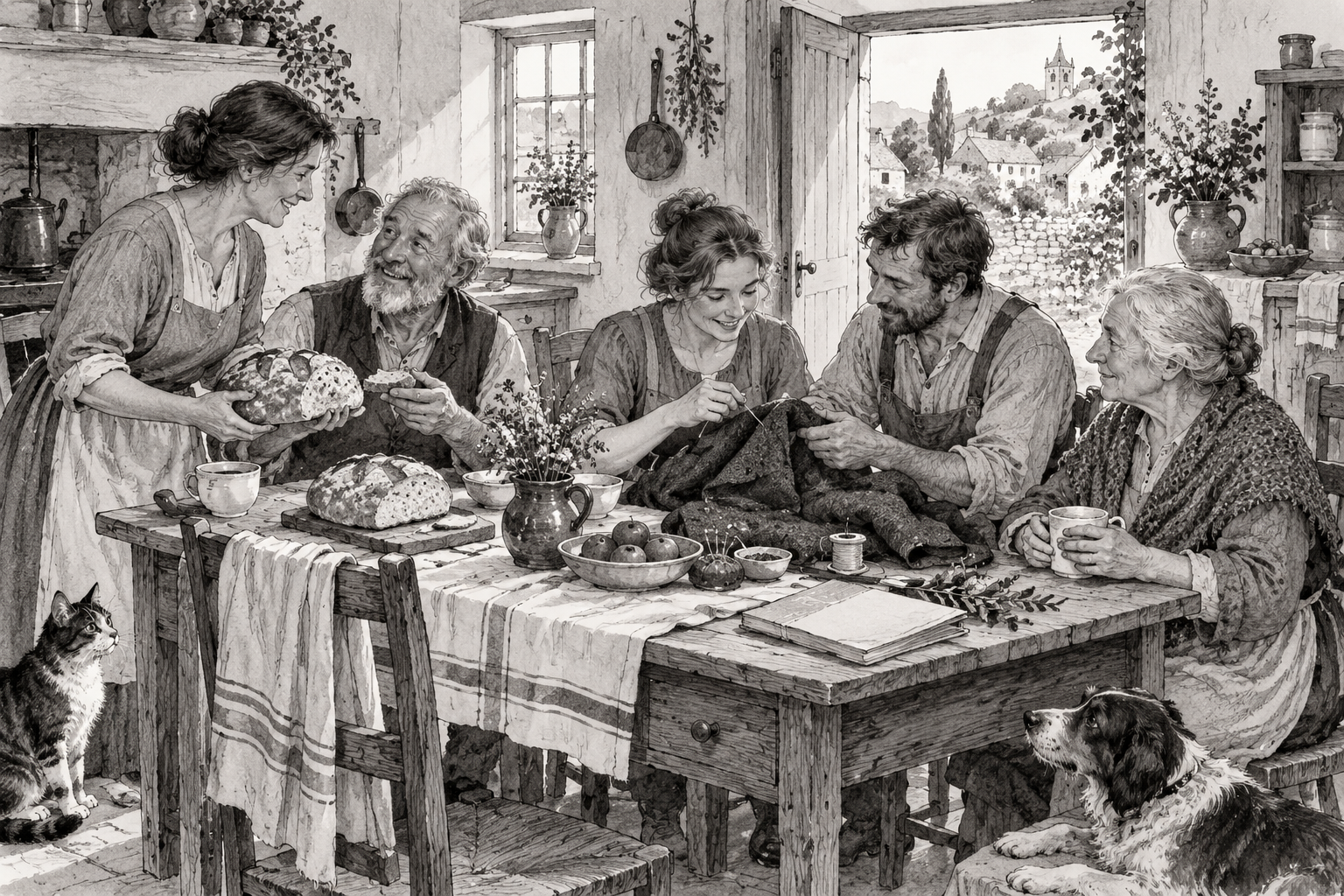
Someone brings bread to a neighbour who has been unwell. Money could change hands, but in this case it does not. The loaf belongs to an arrangement that neither person has fully specified: affection, reciprocity, habit or an understanding that care will travel in the other direction when needed. Its ingredients have prices. The visit cannot be understood by adding them together.
The title suggests a vanished world, but it should not be read literally. There was no single historical moment when everything lacked a price, followed by a universal conversion to money. Different forms of exchange have coexisted, and they still do. A useful history of ideas investigates how people describe those arrangements without assuming that an imagined earlier society supplies a complete remedy for the present.
In The Wealth of Nations, published in 1776, Adam Smith explained how people obtain cooperation through exchange by appealing to another person's advantage. His familiar discussion of the butcher, brewer and baker concerns the coordination of needs among people who cannot rely entirely on personal benevolence. Commercial exchange can make cooperation possible beyond the small circle of those who already care about us. [1]
In his 1925 essay The Gift, Marcel Mauss examined exchanges embedded in social relationships and obligations. Giving, receiving and returning could bind people together rather than merely transfer possessions. His comparative account should not be flattened into a claim that gifts are always innocent or that every society follows one sequence of economic development. A gift may carry expectations, establish standing or create a difficult debt. [2]
Those two perspectives make an instructive pair. Payment can appear cold, yet it may release a recipient from personal dependence. A gift can appear generous, yet leave someone uncertain about what will eventually be demanded. Neither the presence nor the absence of money settles whether an arrangement respects the people within it. The terms of the relationship still need examination.
Think of accepting help from someone who will later invoke it to silence a disagreement. No invoice was issued, but the transaction has become expensive. Conversely, paying fairly for work can recognise another person's independence. The worker need not pretend affection, and the customer need not perform gratitude indefinitely. An explicit price can sometimes place a useful limit on what either party is entitled to expect.
The danger begins when that usefulness becomes a universal vocabulary. We can calculate the replacement cost of a meal without capturing what it meant for somebody to remember we were hungry. We can pay for an hour of care while still needing standards of attentiveness that cannot be reduced to the purchase of sixty minutes. Prices help organise provision; they do not exhaust our reasons for valuing it.
I find the distinction especially important when unpaid work is praised. Calling care priceless can become a convenient way to avoid providing money, rest or practical support to the person performing it. Respect requires more than protecting an activity from commercial language. It may require paying someone properly while acknowledging that what they contribute exceeds the wage.
The question I would keep is therefore not whether we can return to a world before prices. It is whether we can recognise the limits of a price without romanticising dependence. Some obligations should be made explicit, some gifts should be freely refused, and some forms of help deserve reliable public support. At the neighbour's table, the bread is food, but the visit also says that somebody noticed an absence. Both things matter.