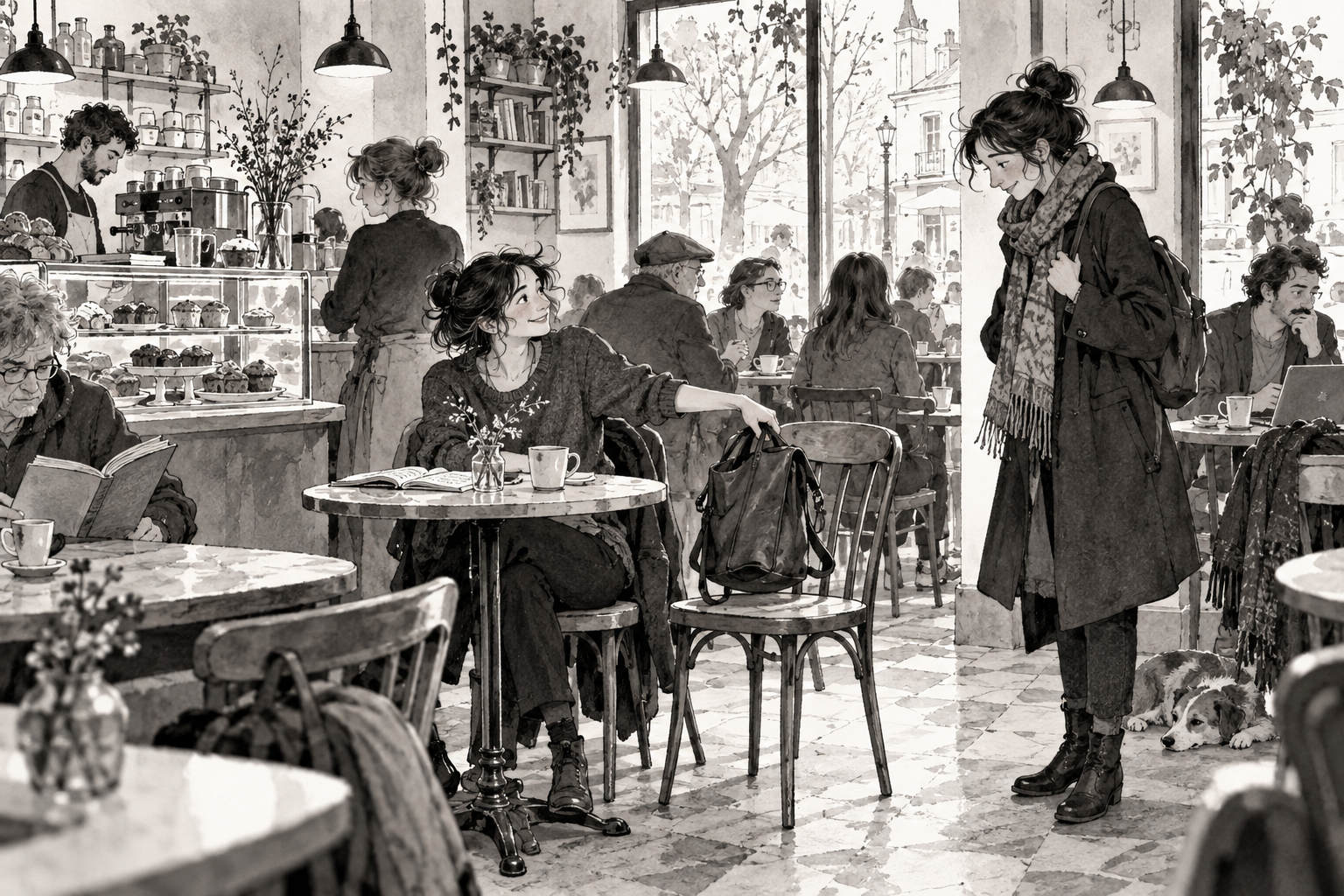
The bag had enjoyed a longer welcome than most strangers.
A bag makes an unusually confident customer. It occupies its chair without buying anything, apologising or wondering whether it belongs. The person standing beside it has considerably more difficulty. I like the small reversal in this drawing: making room begins when an object loses a privilege we had almost forgotten giving it.
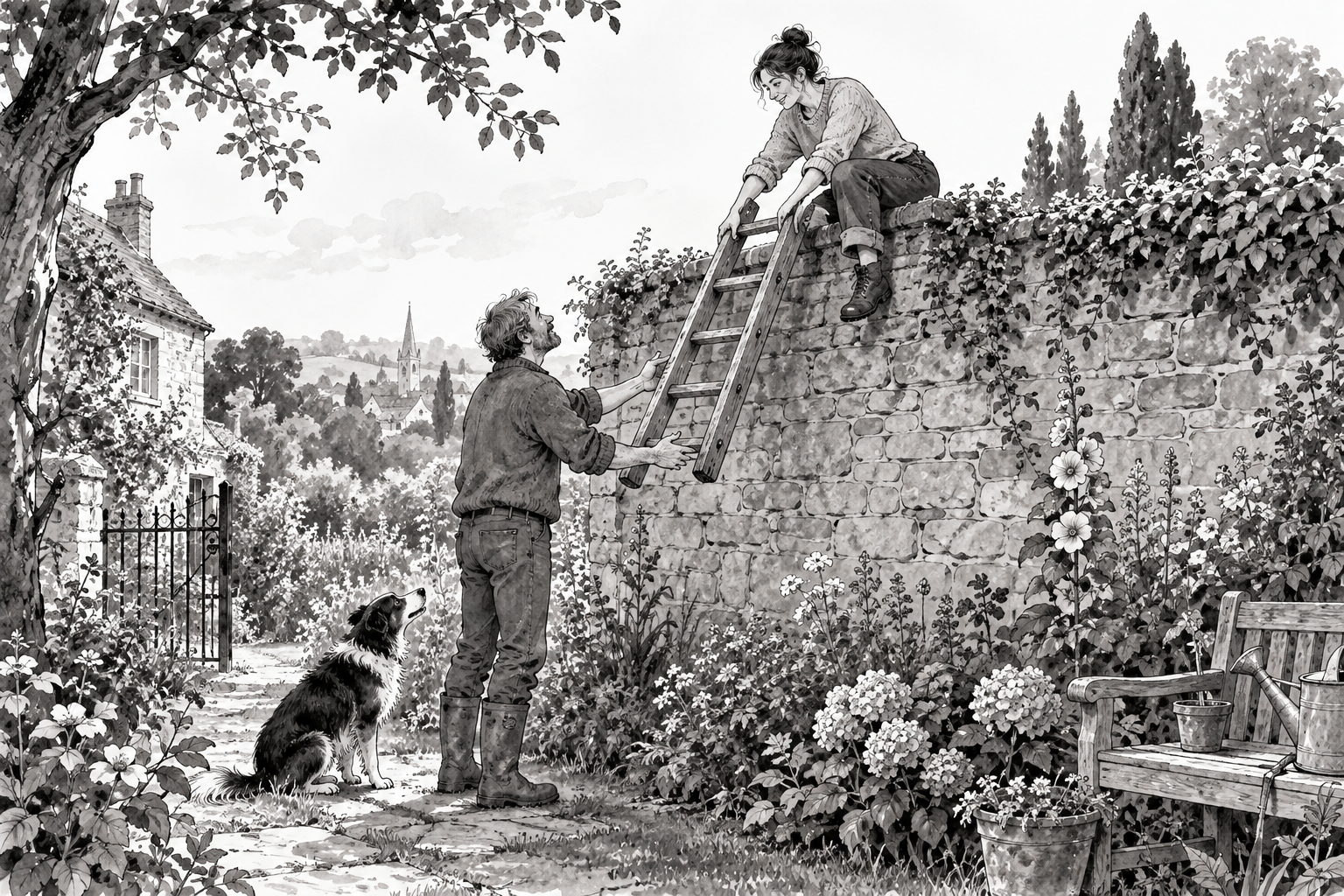
From the top, she could almost remember doing it unaided.
Height changes the view in more ways than one. From the top of the wall, the climb may begin to look like a private achievement: a matter of nerve, balance and persistence. All those things were needed. So was the ladder, which has become surprisingly easy to overlook now that it is no longer carrying our weight.
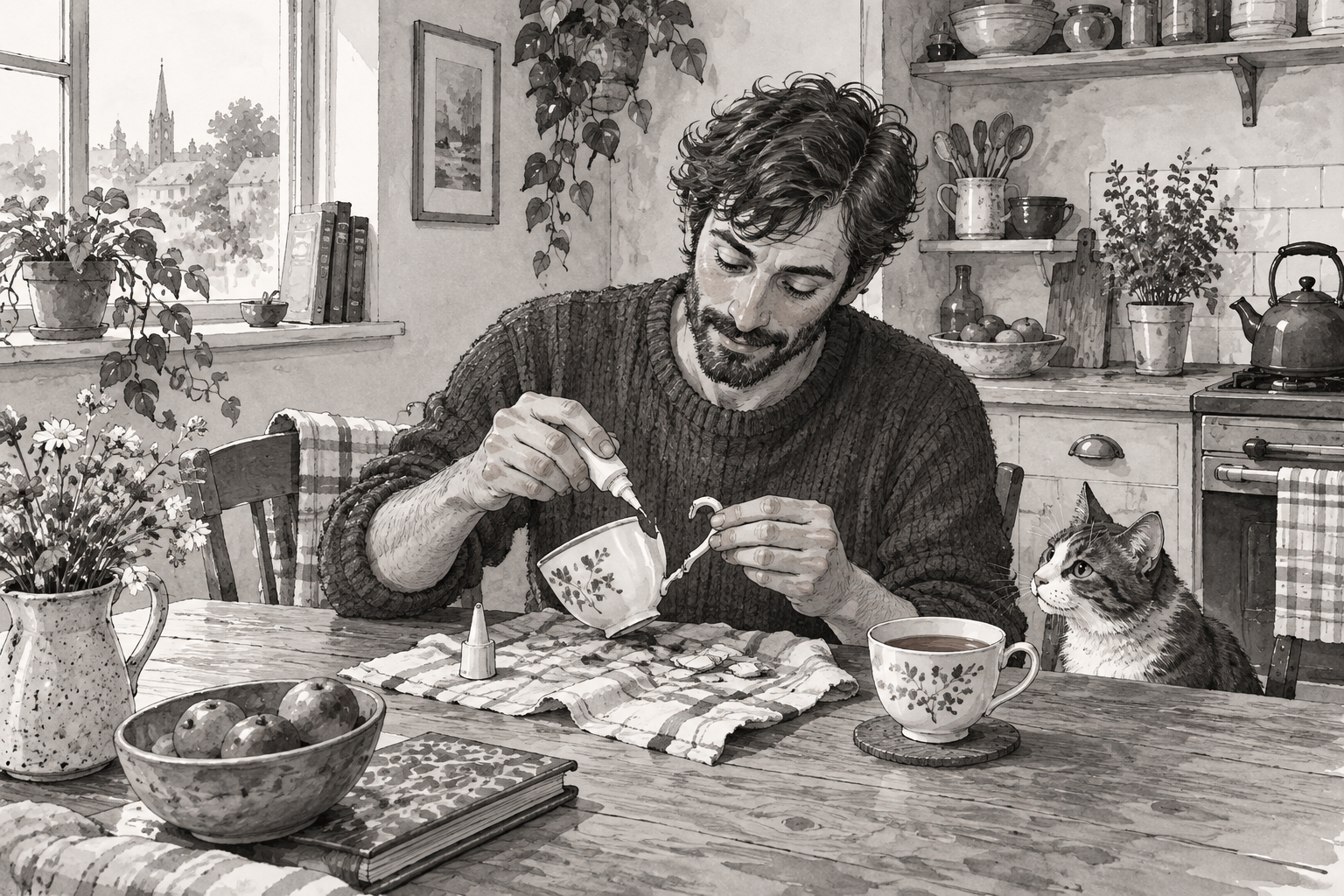
Its replacement could arrive tomorrow. This one was already here.
The arithmetic seems unfavourable. A replacement cup may cost less than an hour of someone's time. On those terms, the person at this table is making a poor decision. Yet the calculation has already decided that time spent attending to an ordinary possession must justify itself against the speed of acquiring another.
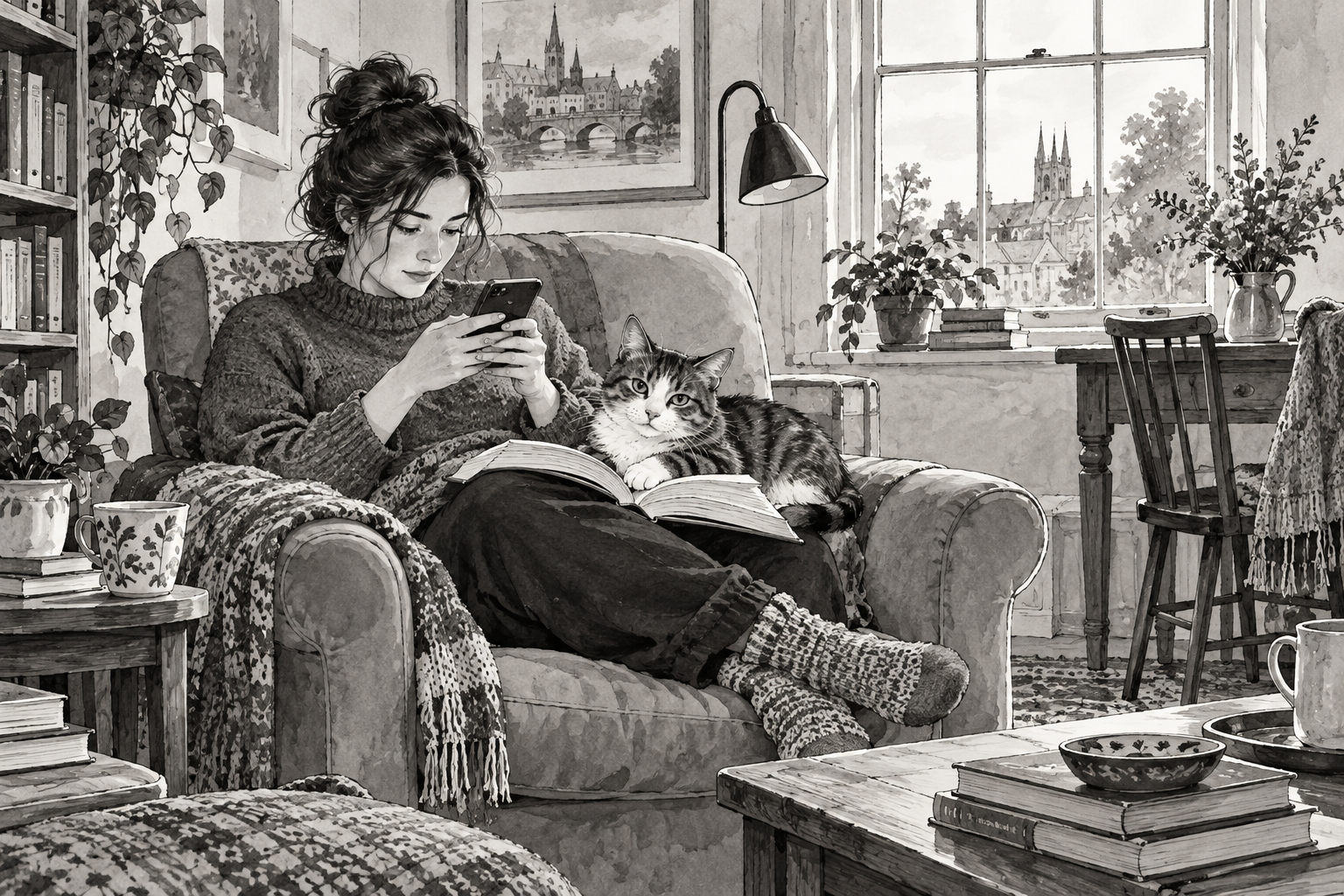
The cat was the only one prepared to interrupt the interruption.
The book is open, which is sometimes as far as a reading intention gets. A message arrives, then another thing worth checking, then the discovery that checking has become the afternoon's principal activity. The cat offers an objection with no interest in whether the interruption is professionally necessary.
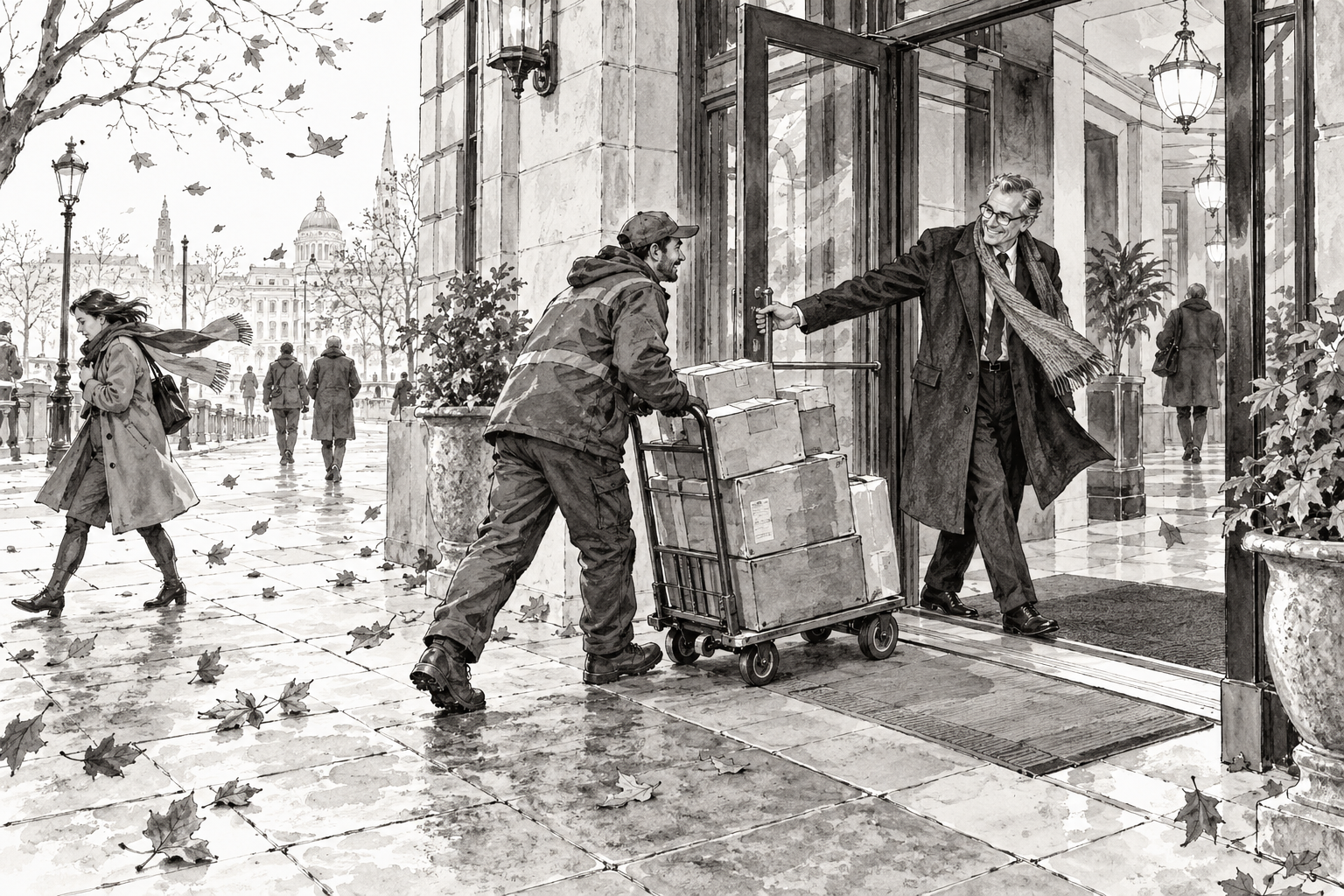
For a moment, efficiency meant waiting for someone else.
Holding a door is a tiny interruption of one's own importance. The next appointment remains ahead; the pavement is cold; somebody else's awkward load takes longer to move than expected. For a few seconds, the person with a free hand allows those facts to rearrange the order of the morning.
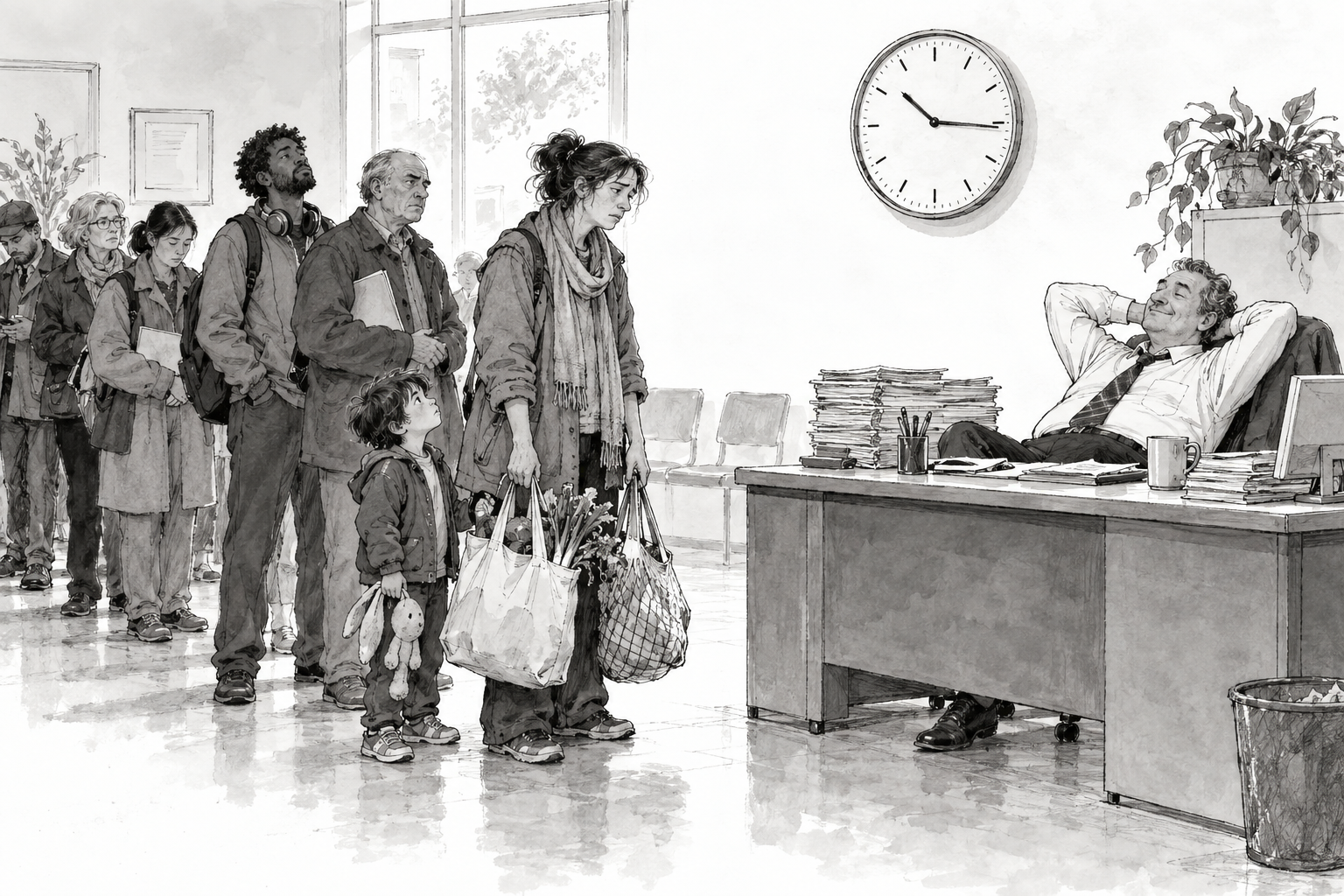
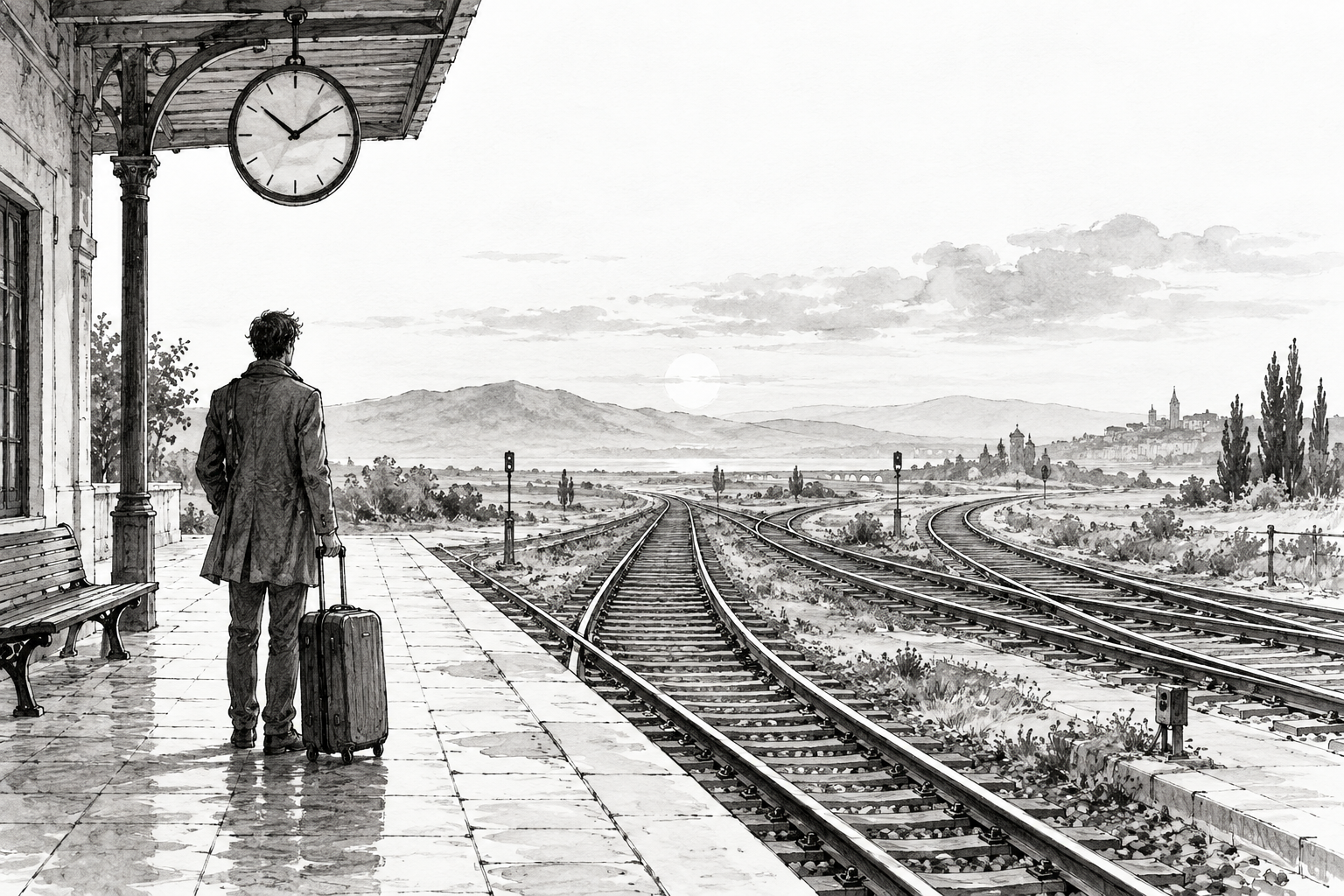
The clock was the only thing treating everyone equally.
I am struck by how confidently a clock presents time as something identical for everyone. Its hands make no distinction between the person whose afternoon is free and the person calculating a missed bus, a late collection or another hour without pay.
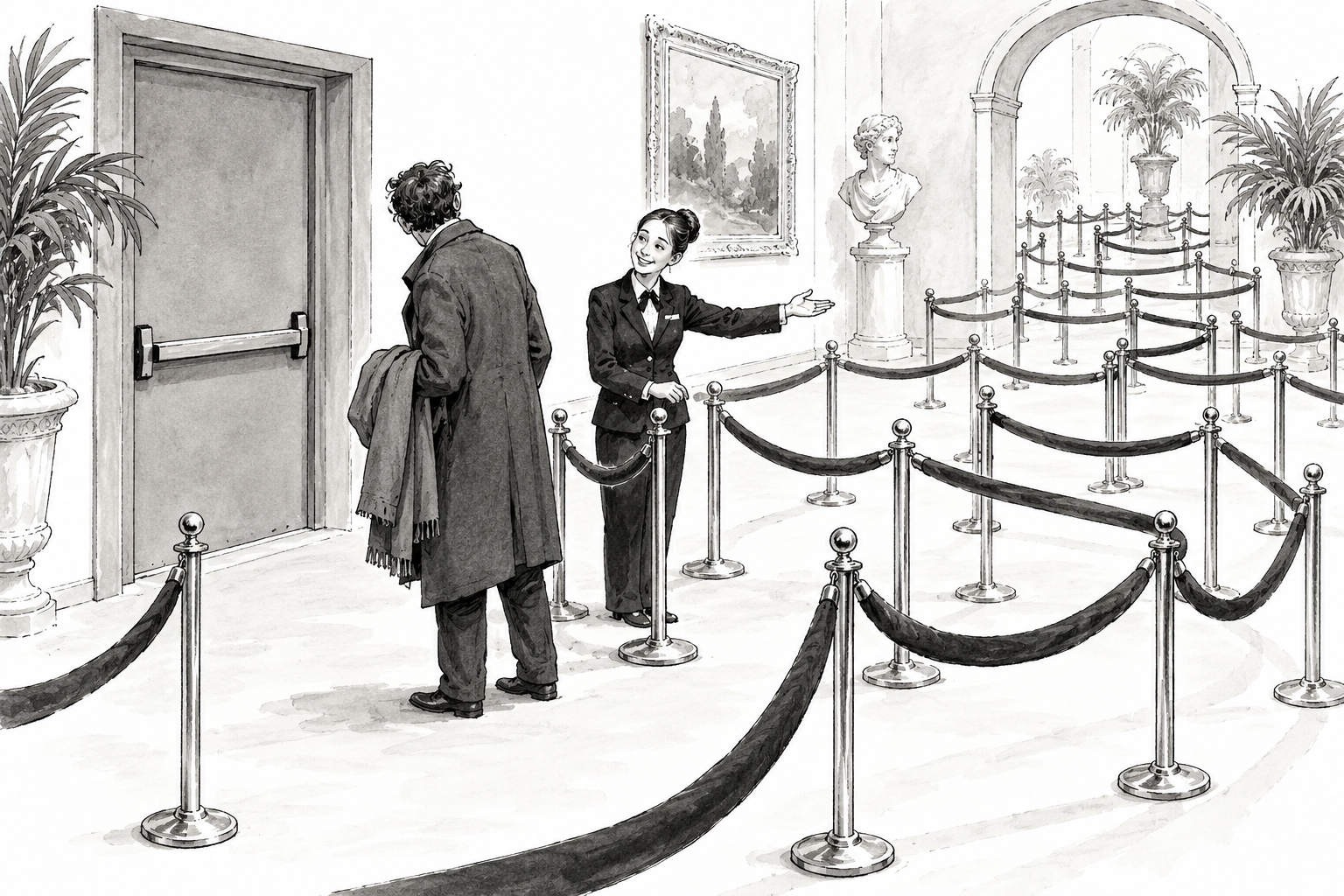
Leaving was simple. First, a short journey through our reasons to stay.
The helpfulness in this scene is what makes it uncomfortable. Nobody is physically preventing departure. Every additional turn can be presented as assistance, an opportunity or a chance to reconsider. The freedom to leave survives in principle while growing expensive in practice.
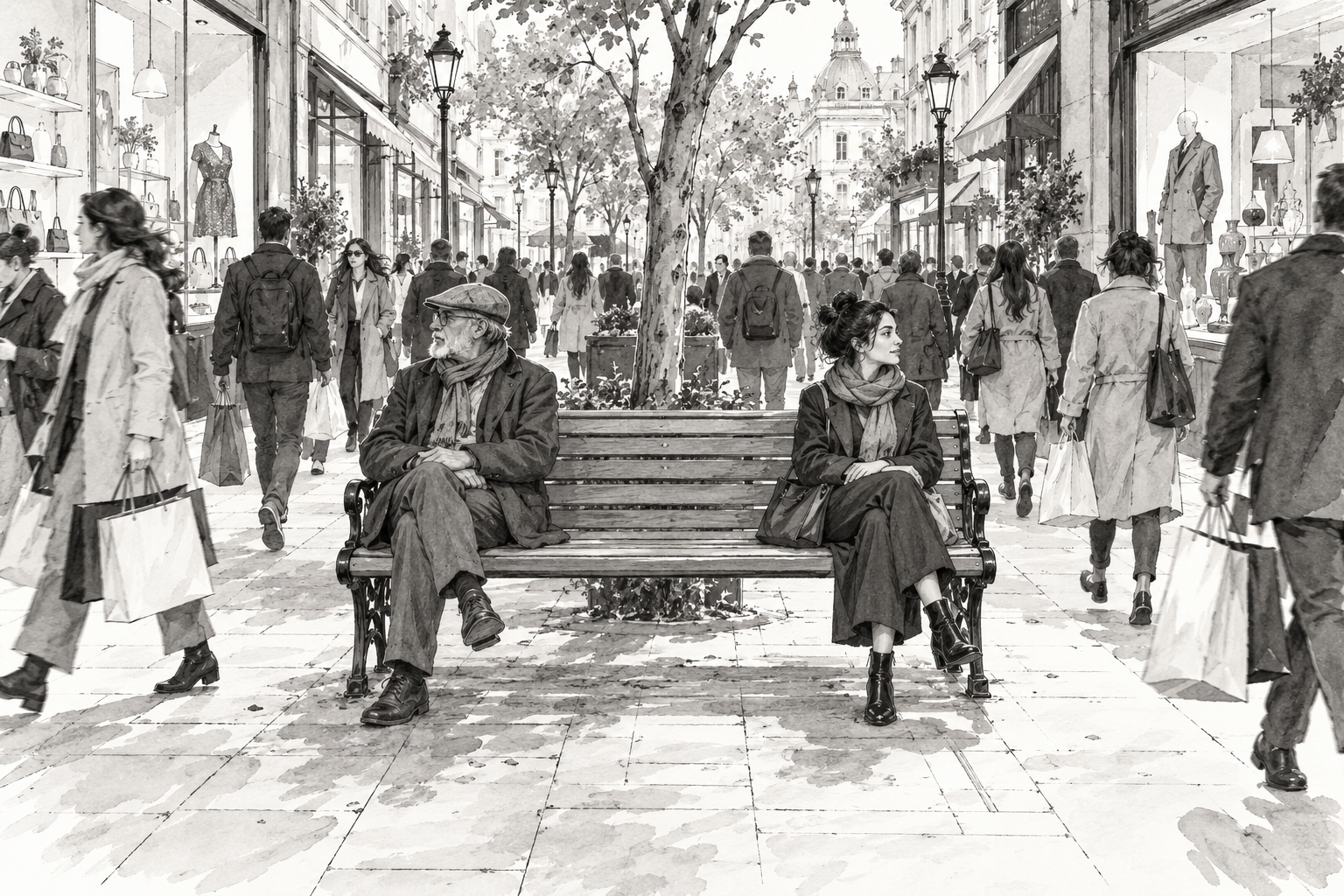
I like the modest ambition of a public bench. It does not ask what we intend to buy, how long we plan to stay or whether our afternoon is making sufficient progress. It offers a place for the body to stop.
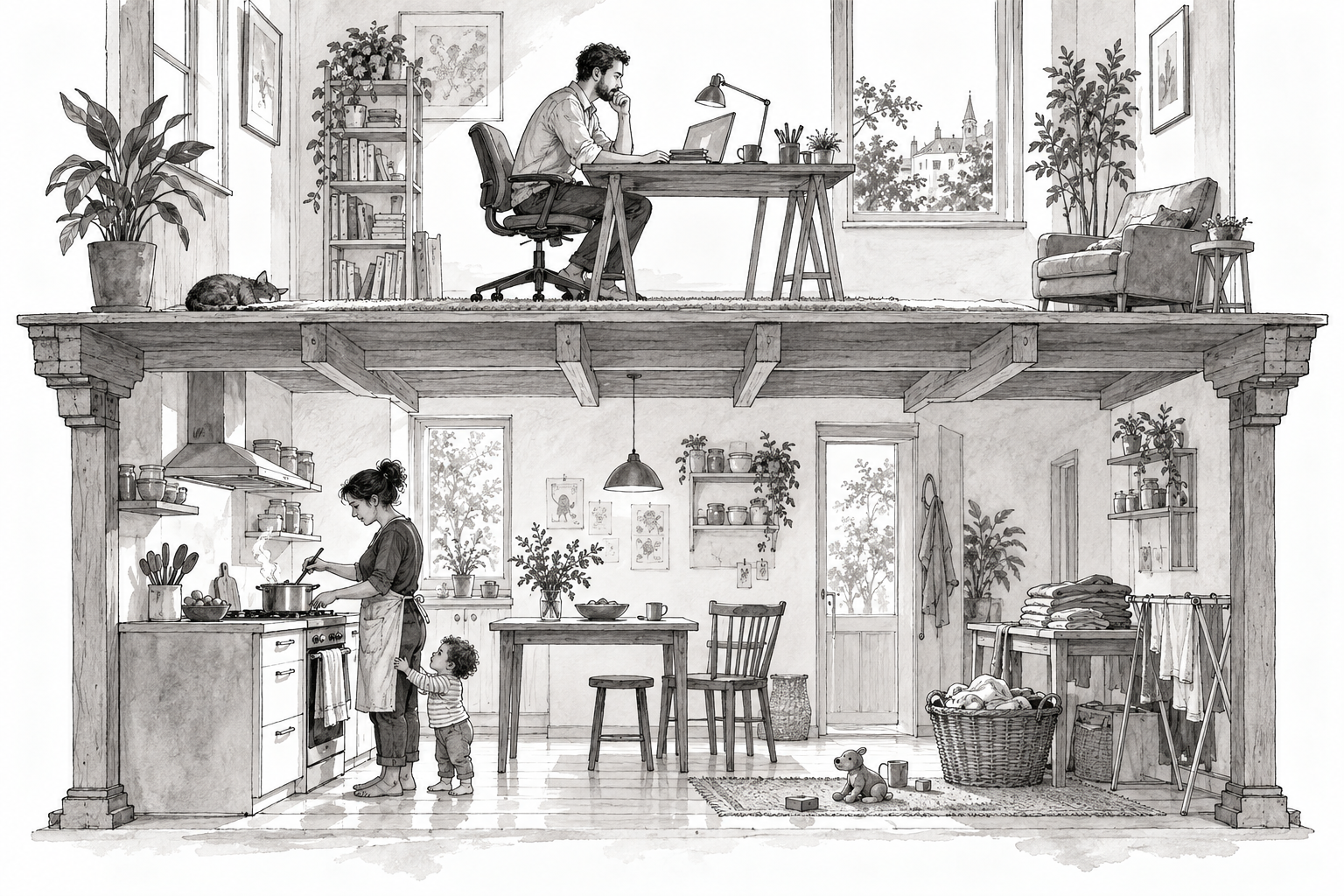
The report described him as entirely self-sufficient.
What interests me here is the floor. It appears solid and unremarkable from above, while the drawing allows us to see everything holding it up. A successful working day often rests on arrangements that disappear from the account of success.
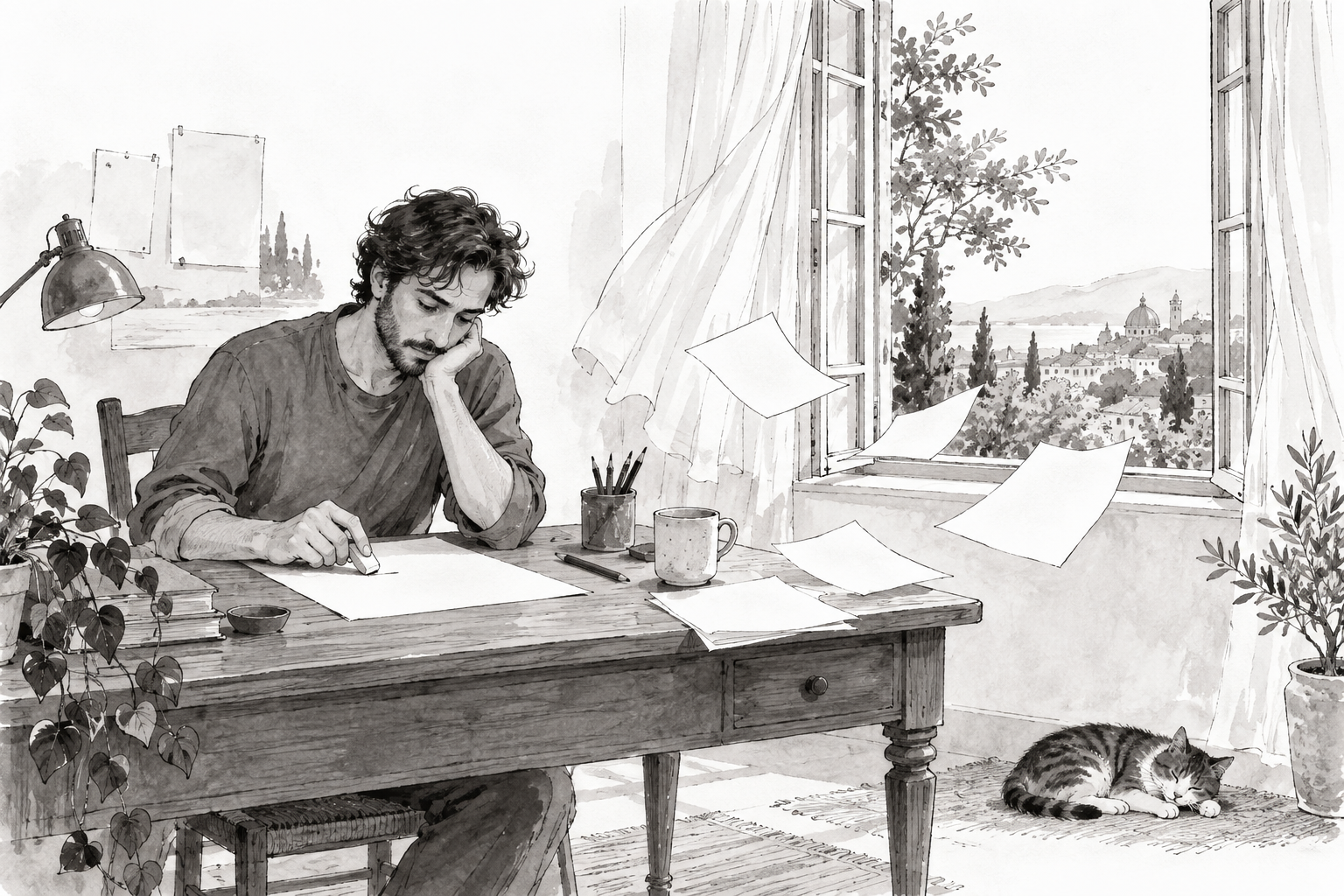
Fortunately, the first draft was written in pencil.
There is something reassuring about an eraser lying beside a pencil. The possibility of error has been admitted before the first sentence is written. Revision is part of the equipment rather than a later confession of failure.
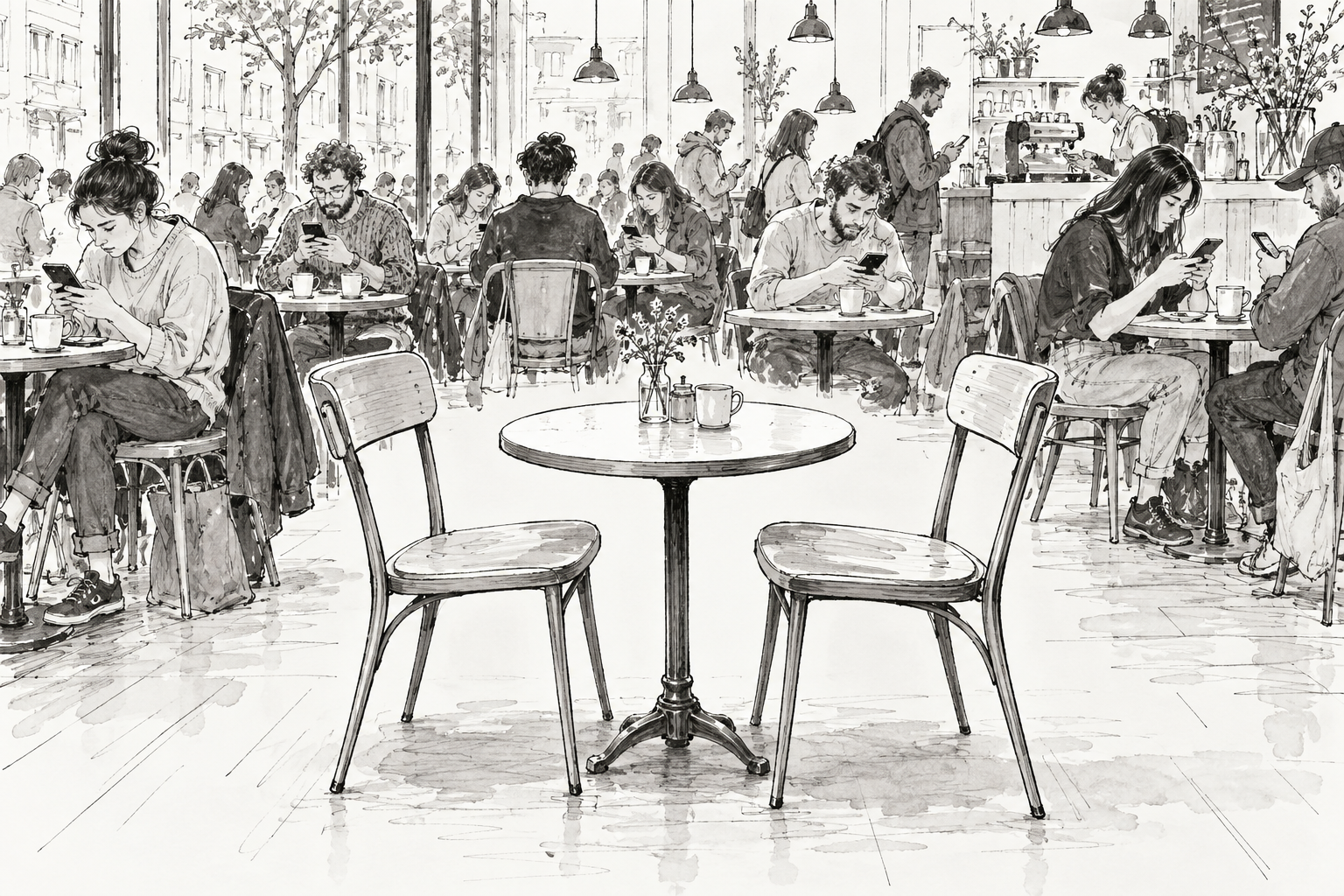
What draws me to this scene is the possibility that the empty chairs are the most sociable things in the room. They still face one another. They have not yet found a more convenient arrangement.
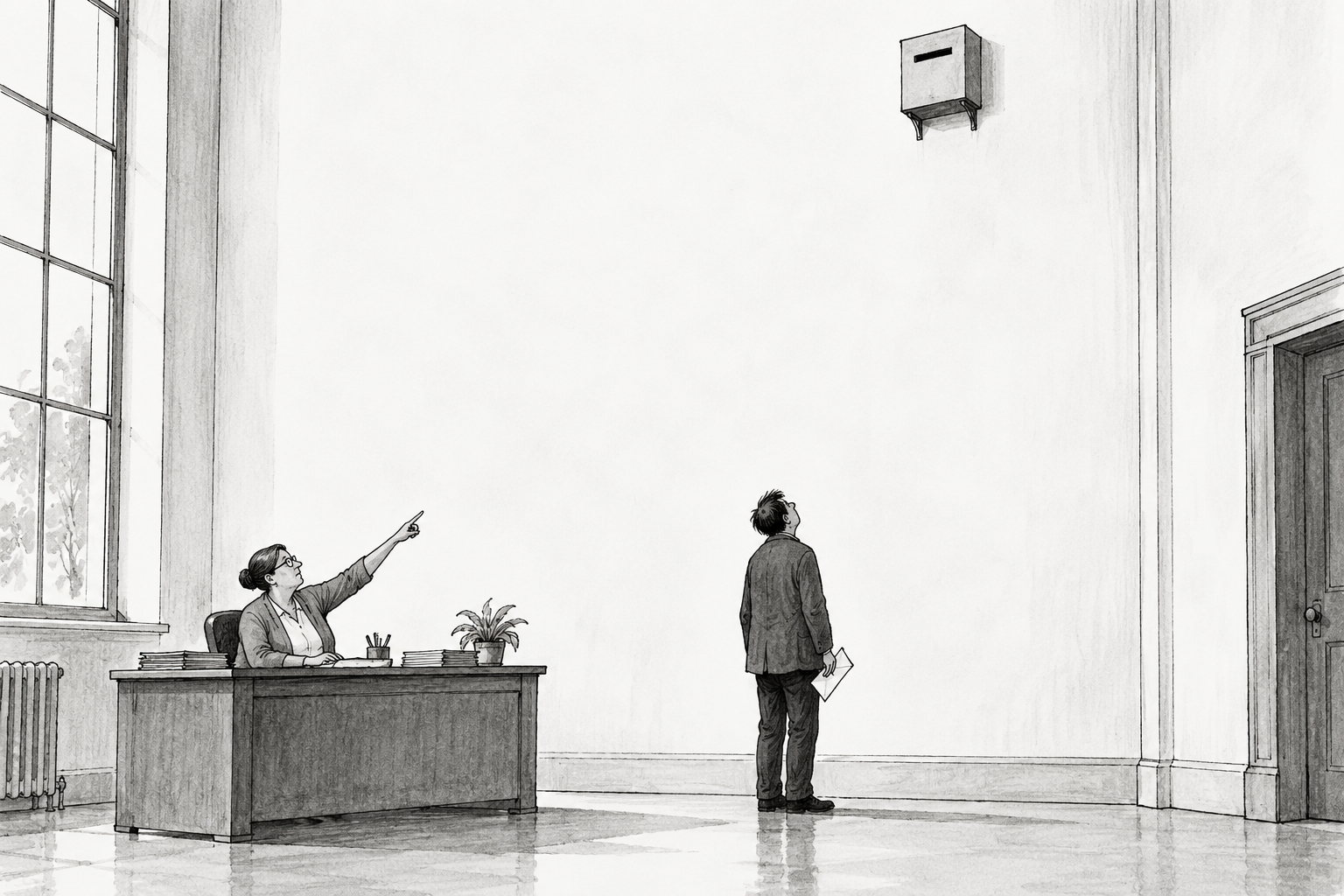
All suggestions are welcome. Access is a separate matter.
I find the height of the box more revealing than any promise an organisation might print beside it. Nobody has prohibited a suggestion. The invitation remains perfectly intact. Only the means of accepting it have become unreasonable.
I once expected graduation to mean everything. When it arrived, I discovered that it was a beginning. I return to that thought whenever an achievement seems to promise a final, settled version of life.